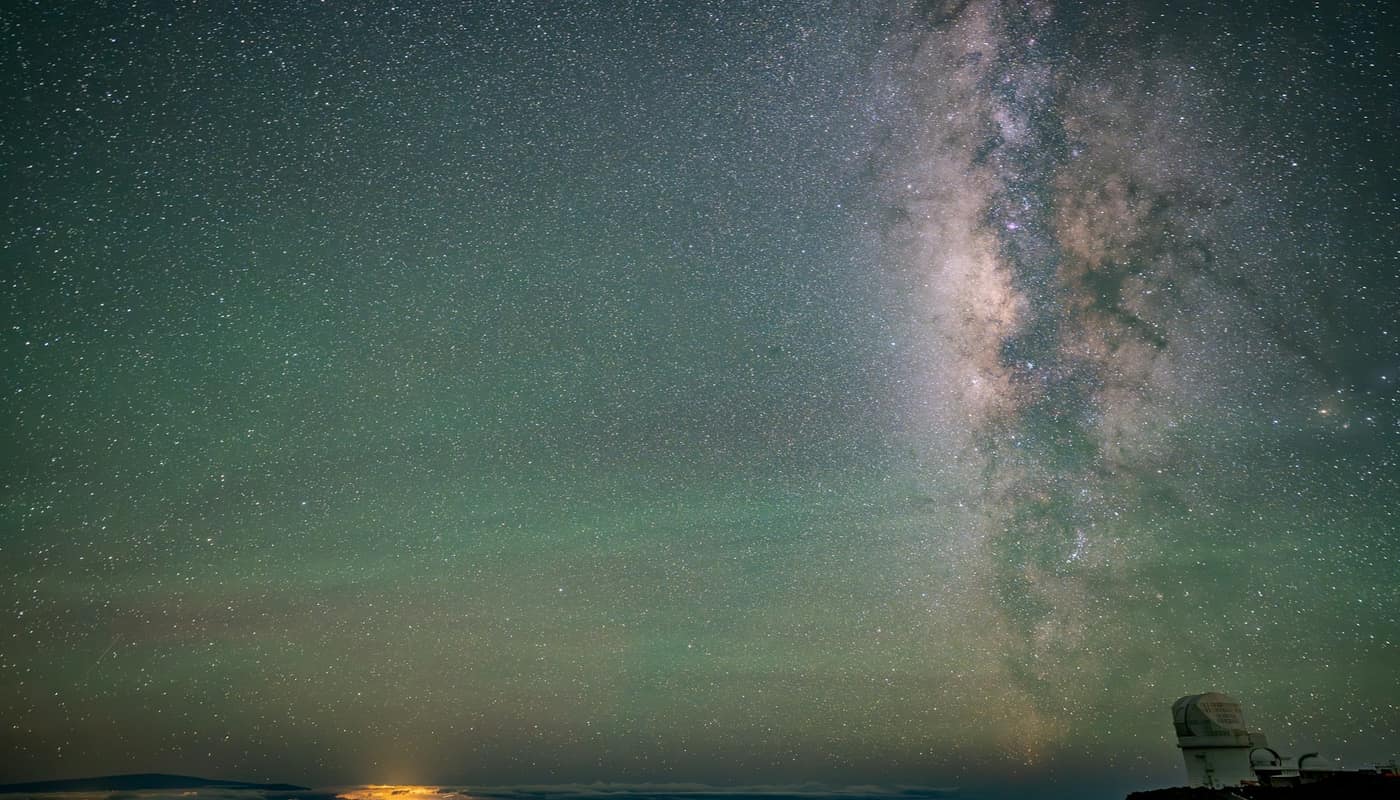
Sunlight takes about eight minutes to reach Earth, so the Sun we see is always eight minutes old. Light from a nearby star may be years old, and light from a distant galaxy can be billions of years old. A telescope that gathers that light is therefore also a time machine, and the James Webb Space Telescope was designed to reach as far back as any instrument has.
Why Webb looks in the infrared
The universe is expanding, and as space stretches, so do the wavelengths of the light crossing it, an effect called redshift. For the most distant galaxies, NASA explains, visible and ultraviolet light emitted long ago is stretched so far that it arrives as near- and mid-infrared. Seeing the first stars and galaxies therefore requires a large telescope sensitive to infrared light, which is the job Webb was built for.
Infrared has a second advantage: it passes through clouds of dust that block visible light, so Webb can look inside regions where stars and planetary systems are forming. NASA lists four science themes for the mission: the early universe, galaxies over time, the life cycles of stars and other worlds.
How far back it sees
NASA reports that the light from the earliest confirmed galaxies has taken more than 13.4 billion years to reach us, and that those galaxies date to less than 400 million years after the Big Bang. The agency says no earlier telescope had both the infrared sensitivity and the large mirror needed to explore “Cosmic Dawn,” the period from roughly 50 million to one billion years after the Big Bang.
On its early-universe pages, NASA lists a galaxy called MoM-z14, confirmed with a redshift of 14.44, which places it about 280 million years after the Big Bang. Redshifts begin as estimates from a galaxy’s brightness in different infrared filters, then are confirmed with spectroscopy, where the light is split into its component wavelengths.
A telescope built to be cold
Infrared detectors work only if the telescope itself is cold, since its own heat would drown out the faint signals. Several design choices follow from that.
The main mirror is built from 18 hexagonal segments, each about 1.32 meters across, forming a mirror of roughly 6.5 meters in diameter. The segments are beryllium, a rigid metal that holds its shape across temperature swings, with a thin gold coating, around 100 nanometers thick, that reflects infrared light very well. The mirror folded up for launch and unfolded in space.
A five-layer sunshield, about the size of a tennis court at 21 by 14 meters, blocks heat and light from the Sun, Earth and Moon. NASA nicknames it “SPF 1 Million,” and it keeps the telescope below about 50 kelvin, which is roughly minus 370 degrees Fahrenheit. NASA says the near-infrared instruments work at about 39 kelvin, while the mid-infrared instrument is colder still.
Where it sits
Webb launched on December 25, 2021, and does not orbit Earth in the usual sense. It circles the Sun about 1.5 million kilometers, or 1 million miles, from Earth at a point known as the second Lagrange point, or L2. From there the Sun, Earth and Moon all lie in roughly the same direction, so one sunshield can block them together. For comparison, the Hubble Space Telescope orbits about 560 kilometers above Earth.
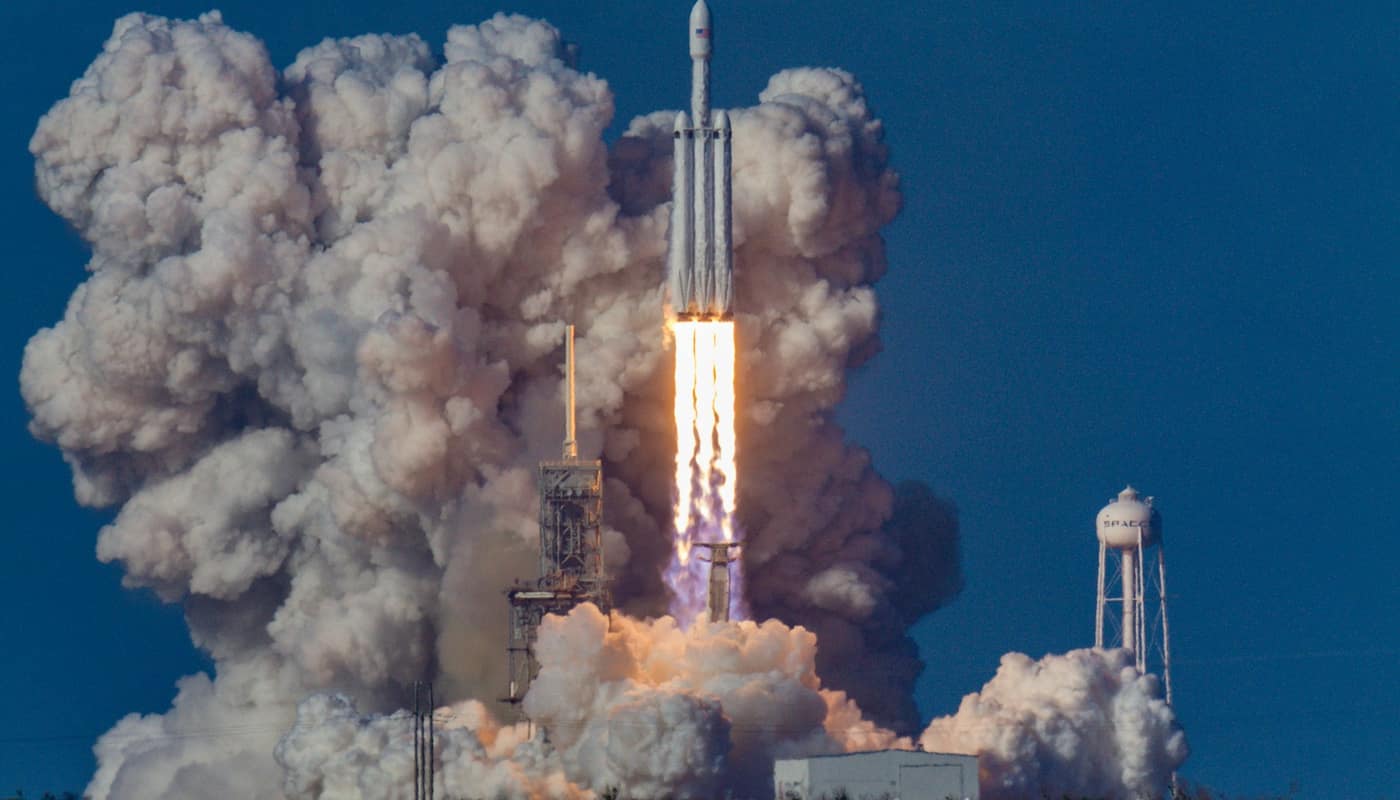
The distance has a cost: unlike Hubble, Webb cannot be visited and repaired by astronauts. Getting instruments like it into space depends on launch capacity, and cheaper flights, such as those in our guide to reusable rockets, could make future observatories more affordable.
Reading a Webb image
Infrared light is invisible to human eyes, so the pictures are processed: scientists assign visible colors to different infrared wavelengths, usually showing longer wavelengths as redder. These representative colors preserve real differences in the data without being what an eye would see.
The telescope also studies stars much closer to home. Stars such as our Sun shine through nuclear fusion, which researchers are trying to reproduce on Earth, as we describe in nuclear fusion explained.