For most of the space age, a rocket flew once. Its stages fell into the ocean or burned up, and the next launch needed a new rocket. That is now changing, and the clearest picture of how comes from a timeline SpaceX published for a mission in February 2026.
A landing, minute by minute
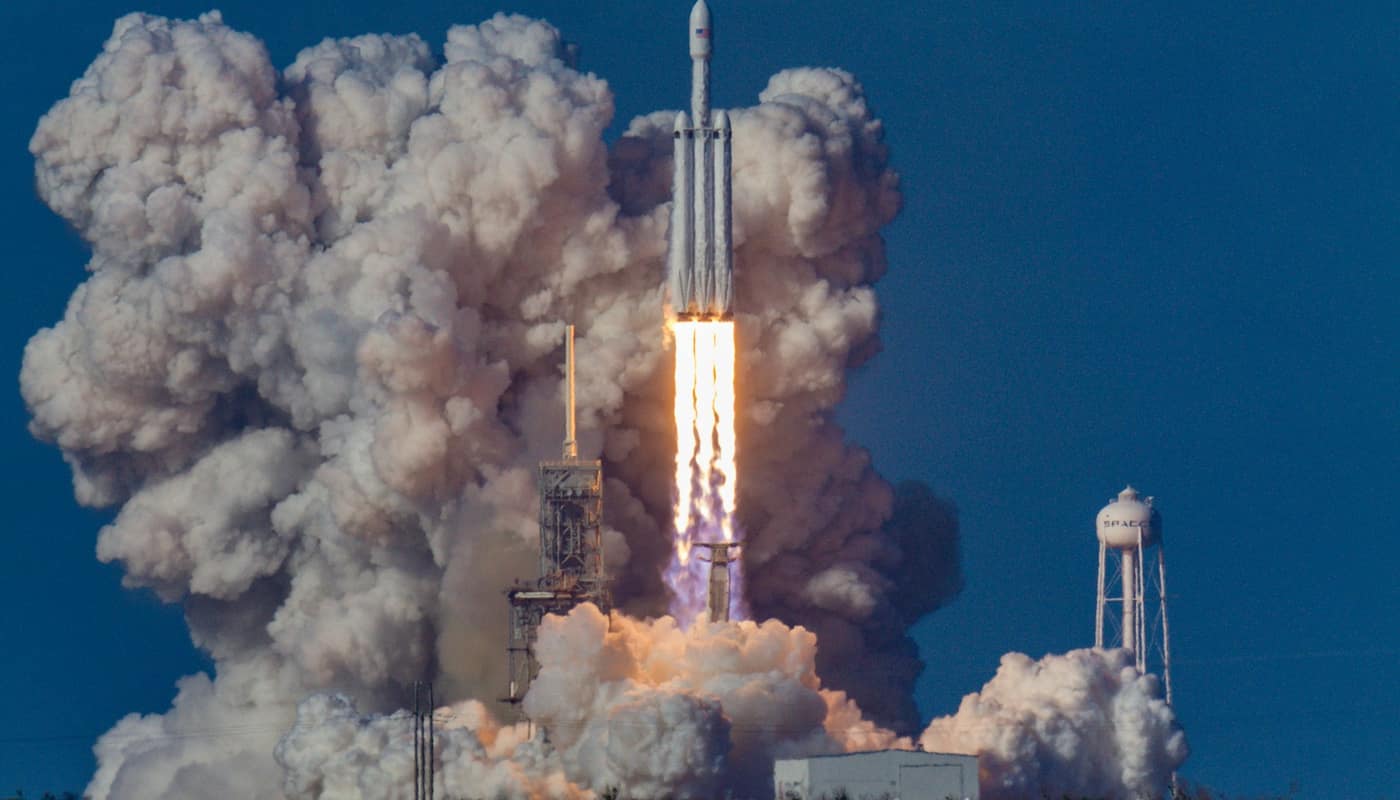
On that flight, a Falcon 9 carrying a crew mission to the International Space Station lifted off, and within three minutes its first stage had separated and begun the return. SpaceX’s mission page lists the sequence. The booster flipped around and relit its engines for a boostback burn lasting about 46 seconds, which turned it back toward land. It fired a shorter entry burn of roughly 13 seconds to slow down for the thick lower atmosphere, then ignited again for a landing burn that began about 55 seconds before touchdown. The stage landed on a pad at Cape Canaveral about seven and three-quarter minutes after launch. It was the second flight of that booster.
In between the burns, the stage falls through the air steering with small lattice-shaped grid fins near its top, and before touchdown it deploys landing legs. The tall, narrow vehicle is guided to a small target by onboard sensors and computers, using engines that can be throttled to change thrust in real time.
How the idea took hold
The first landing of an orbital-class booster by SpaceX came in December 2015. NASA’s Astronomy Picture of the Day described it a week later as the first of its kind for the company’s controlled landings, noting that Blue Origin had landed a booster the previous month on a flight that did not go to orbit.
Reuse has since become routine for Falcon 9. SpaceX’s own payload guide stated in early 2025 that the company had re-flown Falcon first stages more than 384 times, with a 100 percent success rate on those reflights. That is a company figure, and it is now out of date, but it conveys the scale.
Other companies are following. Blue Origin reported that its much larger New Glenn rocket landed its first stage on a ship in the Atlantic in November 2025, on only the second flight of the vehicle, after the booster was lost on the first. The company has said it planned to fly that booster again, and a test-stand anomaly in May 2026 has since slowed the program.
Why it is hard
Landing is only part of the challenge. A booster returning from space endures intense heating and aerodynamic loads, and its engines must restart reliably, after being shut down in flight, several times in one mission. The structure has to be light enough to reach space yet strong enough to survive repeated stress.
Between flights, teams inspect the structure, engines, tanks and electronics, and replace worn parts. The aim is for that work to cost far less than building a new rocket, but it is not free, and operators track how many flights each booster can safely handle.
The upper stage, which travels at orbital speed, is much harder to bring back than the booster, which is why partial reuse has come first. Fairings, the nose cones that protect satellites, have been recovered by some operators too.
What reuse does to the economics
The case for reuse is simple in principle: spread the cost of the most expensive hardware over many flights. In practice it depends on how cheaply and quickly a booster can be turned around, how often it flies and how much cargo capacity is given up to keep fuel in reserve for the landing. Reusable rockets typically carry somewhat less than the same vehicle flown without recovery. Operators accept that when the savings outweigh it.
What is still unproven
Fully reusable launch systems, in which both stages return, remain a goal, not an established practice. Reuse of newer vehicles such as New Glenn is only beginning, and the airline-like turnaround the idea is sometimes compared to is still an aspiration.
Cheaper and more frequent launches change what is practical for science as well as business. Space observatories like the one in our guide to how the James Webb Space Telescope looks back in time depend on reliable access to orbit, and lower costs could make more such missions possible. They also raise questions about orbital debris, congestion and the emissions of frequent launches, which are part of a fuller assessment of reuse than cost alone.